
What Pasadena Resident Lookup Can Confirm
One person can appear in several Pasadena record systems, but each entry answers a different question. A parcel links land to an AIN and situs. A deed identifies parties to a recorded transfer. A court index identifies a case role and docket trail. A vital record identifies a birth, death, marriage, or dissolution event subject to access rules. A license or business filing shows a professional or entity status. A directory or yearbook supplies historical context.
| Record | What It Confirms | Where | Access |
|---|---|---|---|
| Assessor parcel | Property link, situs, AIN, legal geography | Los Angeles County Assessor | Free web facts; owner suppressed online |
| Recorded deed | Named ownership transaction and chain | LA County RR/CC | Name/year office index; paid copy |
| Court case | Party role, filing date, case type, events | Los Angeles Superior Court | Paid name index; case-number access |
| Vital certificate | Birth, death, marriage, or dissolution event | RR/CC or CDPH | Authorized, informational, or confidential rules |
| License or business | Status, entity, agent, or address of record | DCA or Secretary of State | Free public search; not residence proof |
| Directory or yearbook | Historical address, spouse, occupation, class, or school | PPL, PMH, PCC | Digitized and staff-assisted collections |
The best resident lookup uses two independent matching facts and a time check. A same name with the same middle initial and spouse is stronger than a name alone. A case role and filing date can separate two people, but a case address may be stale. An entity address is an affiliation clue. Keep the record’s exact role beside the name.
Pasadena Resident Records Need Two Facts
Normalize the name first. Try initials, spacing, hyphenation, married or former names, and likely spelling variations. Then anchor the search with a fact that another source can test: a middle initial, spouse, occupation, stable city, parcel legal description, case number, license number, or business file number.
A name-to-address workflow can begin with the Assessor parcel, but owner names and owner mailing addresses are suppressed on the public web. A permitted office or Data Sales route may produce an owner lead. Carry that lead to the offline recorder index, which searches by grantor, grantee, and recording year. The resulting deed proves a recorded transaction, not the identity of every occupant.
- Docket
- A court’s running record of filings, events, hearings, and orders in a case.
- Index versus image
- An index points to a record; an image or certified copy is the fuller official product.
- Certified copy
- A copy issued or endorsed by the custodian for a stated official use, subject to eligibility.
- Disposition
- The recorded outcome or status of a case, which should be read separately from allegations.
Negative results need the same caution. A protected voter, sealed family case, offline deed, or incomplete historical collection can hide a valid match. The question is not whether a person appears in one search. It is whether the lawful record trail supports the specific fact being checked.
Pasadena Court Lookup by Name
The Los Angeles Superior Court Case Access gateway serves Pasadena’s Superior Court records. The court's public case-access landing page provides the broader entry point. Case Access accepts a court-formatted case number. A separate party-name route covers civil, family, and probate matters, while a defendant-name route serves criminal searches. Case Calendar and Case Document Images are separate modes.
| Search control | Type | Required | Access note |
|---|---|---|---|
| Case Number | Text | Yes | Use the court-formatted number, then select ACCESS CASE or ACCESS CALENDAR. |
| Party Name | Tab or link | Yes for name route | Searches civil, family, and probate indexes; paid guest or registered access. |
| Defendant Name | Tab or link | Yes for criminal route | Criminal name-search path; not a certified record. |
| Case Document Images | Tab or link | No | Civil limited, unlimited, and small-claims images may be available; family and criminal images are not remote. |
| New Search | Button | No | Returns to the search screen. |
A guest name search costs $4.75. Registered pricing ranges from $1 for 1–10 searches per month to $4.00 for 10,001 or more, with intermediate tiers documented by the court. Payment occurs before the query and is nonrefundable even when no match appears. Once a case number is known, case-number access is the more direct next step.
Pasadena Courthouse is at 300 E. Walnut Street, Pasadena, California 91101, with building hours of 8:00 a.m. to 4:30 p.m. and clerk hours of 8:30 a.m. to 4:30 p.m., Monday through Friday except holidays. The courthouse may provide fuller access to nonconfidential material than remote electronic search.
Pasadena Case Records, Read Carefully
A public LASC result can supply a case number, filing courthouse or district, filing date, case type, party names and roles, docket events, hearings, and a disposition where public. The result is not an official court record. A complaint allegation is not an adjudicated fact, and an old address in a filing may be stale.
| Visible field | Use in a resident lookup |
|---|---|
| Case number | Stable key for later case-number access. |
| Filing date and courthouse | Places the event in time and geography. |
| Party name and role | Separates plaintiff, defendant, petitioner, respondent, or other role. |
| Case type and docket | Shows the proceeding category and filed events. |
| Disposition or order | Helps distinguish an outcome from an allegation. |
| Document image access | Civil image purchase may apply; family, criminal, sealed, juvenile, and adoption material is limited. |
California has no unified statewide trial-court party-name portal. Pasadena matters use Los Angeles Superior Court, while a federal case belongs in the Central District of California and PACER. Probate can identify a decedent, petitioner, executor, or named heir, but protected attachments and personal identifiers may be sealed.
Pasadena Resident Voter Status
The California Secretary of State’s My Voter Status form asks for last name, birthdate, house number, and ZIP Code. Those fields authenticate the person checking their own registration. The result is not a public Pasadena resident lookup and cannot enumerate the people on a street.
| Field | Type | Required | Format |
|---|---|---|---|
| Last Name | Text | Yes | Alphabetic name. |
| Birthdate | Date or text | Yes | MM/DD/YYYY. |
| House Number | Numeric text | Yes | Residence number. |
| ZIP Code | Numeric text | Yes | Residence ZIP. |
Los Angeles County can provide restricted voter information through a separate request with identity, permitted-purpose statement, security agreement, and fee. The state's voter-registration guidance explains the status and confidential-voter framework. Safe at Home voters are excluded. Participation codes indicate whether a ballot was cast or returned, never how someone voted. A public visitor should not treat a missing status match as proof that a person is absent.
The My Voter Status form is the official starting point for a person checking their own registration details.
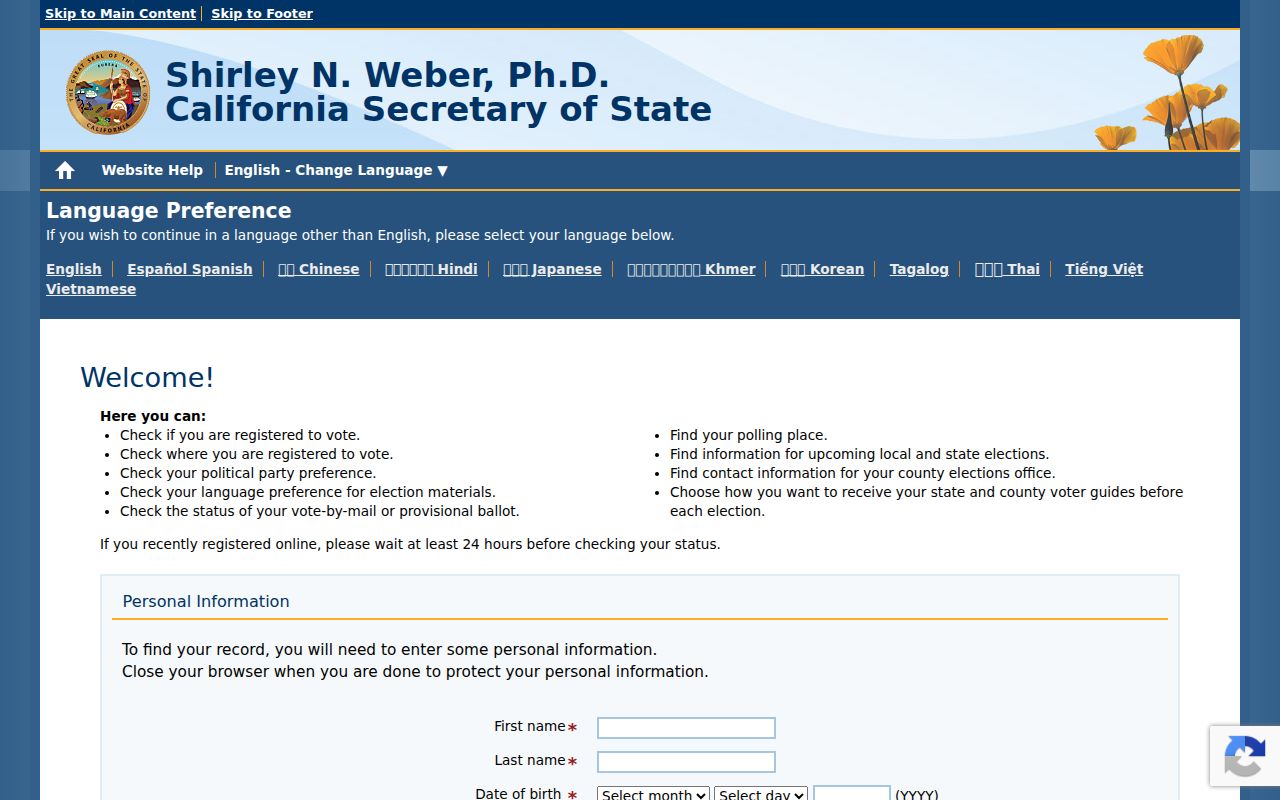
The form’s required identity and residence fields show why voter status is a self-check, not a public list of Pasadena residents.
Pasadena Vital Records Have Two Paths
Pasadena birth and death events may begin with the local registrar or Los Angeles County Registrar-Recorder/County Clerk. County records describe births since 1866 and deaths since 1877. Norwalk is at 12400 Imperial Highway, with a county mail route through P.O. Box 489. The 2026 county fees are $34 for a birth, $26 for a death, and $19 for a marriage. County online orders can add a processing charge.
California Department of Public Health Vital Records supplies a statewide mail route. Its 2026 fees are $31 for birth, $26 for death, $19 for marriage, and $18 for dissolution. Health and Safety Code §103526 controls authorized certified copies. An authorized copy requires a statutory relationship and a sworn or notarized identity statement. An informational copy can be available to others for an eligible public record, but it is marked informational and cannot establish identity.
Confidential marriage certificates are not open for general inspection. Family Code §511 limits access to the spouses’ statutory route or a court order showing good cause. Adoption records and original birth certificates are sealed under their own court and statutory processes. A dissolution certificate from CDPH is not the same thing as the pleadings and orders in an LASC file.
| VS 111 item | Requirement |
|---|---|
| Authorized or informational choice | Required; authorized copy triggers eligibility and notarized statement rules. |
| Relationship eligibility | Registrant, parent, child, grandparent, sibling, spouse, qualifying representative, official agency, court order, or other listed class. |
| Registrant name, place, date, parents | Record-identifying fields; exact or approximate date may be supplied. |
| Applicant identity and contact | Name, address, phone or email, reason, quantity, and payment enclosure. |
Pasadena Lookup Tools Add Context
California’s Department of Consumer Affairs license search accepts boards or bureaus, license type or number, business name, and first or last name. Advanced filters can add registry number, cities or counties, status, discipline, and documents. A license address is an address of record. It is useful context, not proof of a home.
The Secretary of State’s bizfile Online search can use entity name or file number, with entity type, status, and initial filing date controls. The State Controller’s unclaimed-property form requires a last or business name or Property ID and accepts optional first name, city, and ZIP. Exact matches appear before similar names, searching and claiming are free, and there is no deadline to claim. For custody-specific questions, use the Los Angeles County Sheriff inmate locator or the California incarcerated-person locator; neither is a residence record.
The California unclaimed-property search can help reconnect a family member with an official claim, but an old city association is not current-residence evidence.

The captured claim search shows why an exact name and optional city or ZIP work best as a lead that still needs independent confirmation.
The California license search provides the professional-record route.
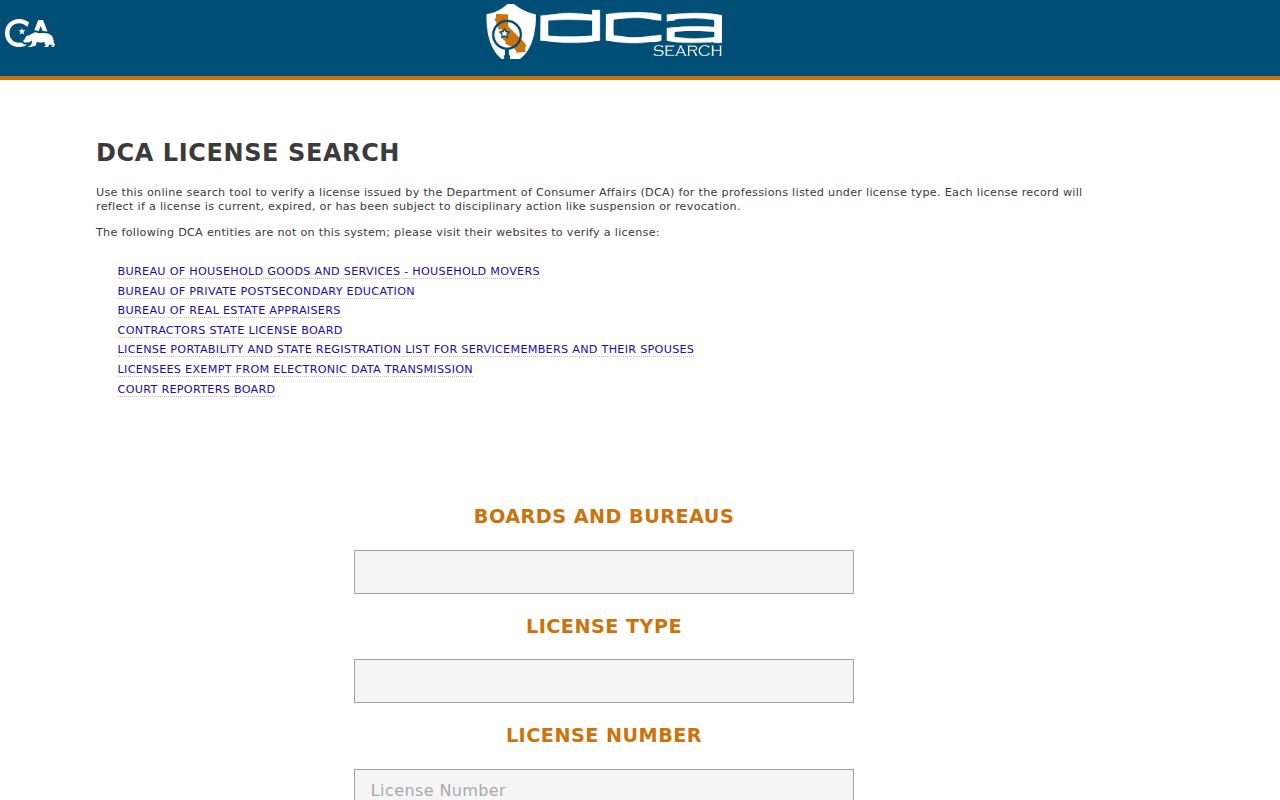
A license result can distinguish two people with the same name when the status, number, or field matches the known time period.
Pasadena History Adds Resident Clues
A resident lookup does not have to begin with a modern portal. Pasadena Public Library’s Centennial Room holds directories back to 1880, newspapers, maps, yearbooks, oral histories, and the Pasadena Master Index. PCC yearbooks run from 1899 to 1968, and the PCC archive’s newspapers span 1915–2016. Those collections can help reconnect classmates, trace a family address, or distinguish a person with the same name.
When a directory clue needs a modern check, pair the address, spouse, occupation, or school with a dated parcel, court, license, or vital record. For a birth-parent inquiry, use California’s official adoption and court processes because sealed adoption files are not a public name index. For an heir question, probate, obituary, and recorded documents may identify the relevant role without exposing unrelated personal details.
The California DOJ Record Review route is for a person reviewing their own California criminal-history record through fingerprint submission, not a public lookup of another person.
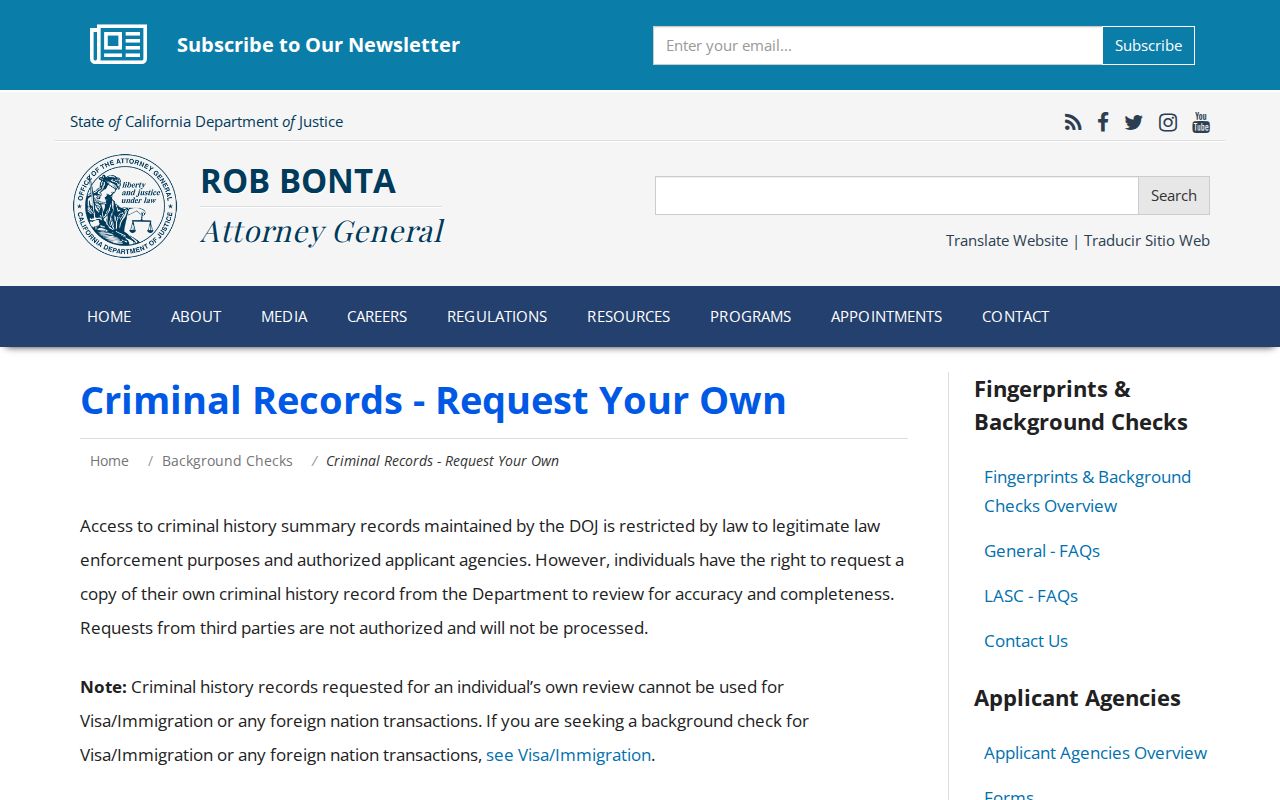
The record-review image marks a key boundary: subject access is different from a public third-party search.
Businesses can supply another affiliation clue. The California Secretary of State bizfile search can return entity number, formation date, status, jurisdiction, agent, and street or mailing address.
Entity and license addresses should remain labeled as business or service locations in a resident lookup.
Correct a Pasadena Resident Record
When an official result is wrong, the correction path belongs to the office that created or maintains it. Ask the Assessor about parcel facts. Ask LASC about a docket or court file. Ask the licensing board about a license entry. Use DOJ’s Record Review challenge process for a person’s own fingerprint-based record. Contact RR/CC for a vital or recorded-document copy issue.
Keep the exact record number, date, field label, and requested correction together. A commercial compilation cannot correct the public record, and repeating the same name in more searches does not make a match stronger. The most useful resident lookup ends with a clear source and a clear uncertainty.
Legal Limits on Pasadena Lookup
California’s Safe at Home program, Government Code §§6205–6216, provides a substitute mailing address and confidential voter registration for eligible people facing specified safety risks. Protected records are designed to remove location clues. A missing name or address is not evidence that the person is missing from Pasadena.
California’s 2026 DROP program can send deletion or non-sale requests across registered data brokers, but it does not erase county deeds, city records, or historical library holdings. Public custodians also follow their own confidentiality, sealing, and statutory access rules. Use the least revealing source that answers the lawful question.
Use records lawfully. Pasadena resident lookup results are for personal, family-history, civic, property, and genealogy research. Do not use a name or address trail to stalk, harass, threaten, or harm anyone.
A responsible conclusion says that a named record connects a person to a role, place, or event at a stated time. It does not claim certainty beyond the custodian’s fields.